
 15th, August 2026
The best fishing sunglasses combine effective polarization, an appropriate lens tint, secure frame coverage, and impact-resistant construction suited to the fishing environment. Saltwater anglers typically need strong glare control, while freshwater and low-light conditions may benefit more from contrast-enhancing or higher-transmission lenses.
When selecting fishing eyewear brands, thorough inspection of the manufacturing process, frame durability, lens capability, raw materials, and production consistency will ensure that the potential for quality problems can be avoided before mass production ships out from the plant.
Polarized fishing sunglasses are particularly useful in water-based activities due to their ability to minimize reflected horizontal light that causes excessive glare and fatigue. The polarized lenses have vertical filters that help eliminate horizontal light and thus reduce the amount of water glare significantly.
Optical contrast is vital when differentiating moving fish against an ever-changing underwater environment such as the grass flats or rocky creek beds. Copper and amber colored contrast base lenses eliminate the high energy blue light and thus help make fish silhouettes clearly visible.
High-performance lenses fail if harsh peripheral light leaks in from the open sides of the frame. Professional frames feature high-wrap designs that contour closely to the face, while hydrophilic rubber nose pads increase grip as perspiration rises during active casting operations.
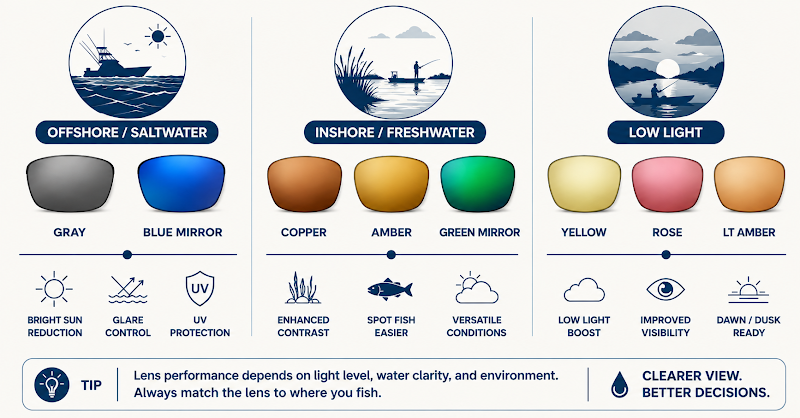
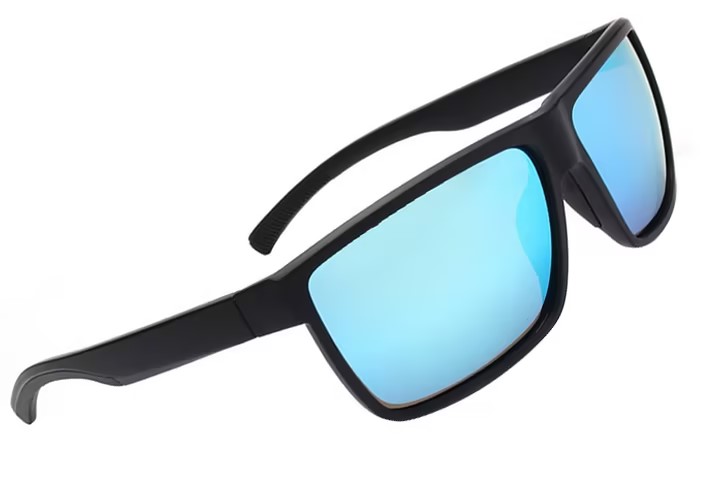
Offshore marine environments present intense direct sunlight and severe glare reflected off the deep ocean surface. Gray-base lenses with blue mirrored coatings can be effective in bright offshore conditions by controlling brightness and reflected glare.
Actual light transmission depends on the specific lens tint and coating specification, so buyers should verify the stated transmission level for each model. These specialized fishing sunglasses for saltwater should also provide appropriate UV protection for the intended market.
Inshore flats and shallow freshwater streams present highly variable light conditions and vegetated green backdrops. Copper or amber base lenses can enhance contrast against varied backgrounds, while green mirror coatings can suit brighter conditions. The final choice should account for light level, water clarity, and the fishing environment.
During dawn, dusk, or heavy cloud cover, dark lenses restrict too much light and limit visibility. Low-light conditions generally favor yellow, rose, or high-transmission amber tints that allow more visible light through than dark lenses, helping preserve visibility during dawn, dusk, or overcast conditions.
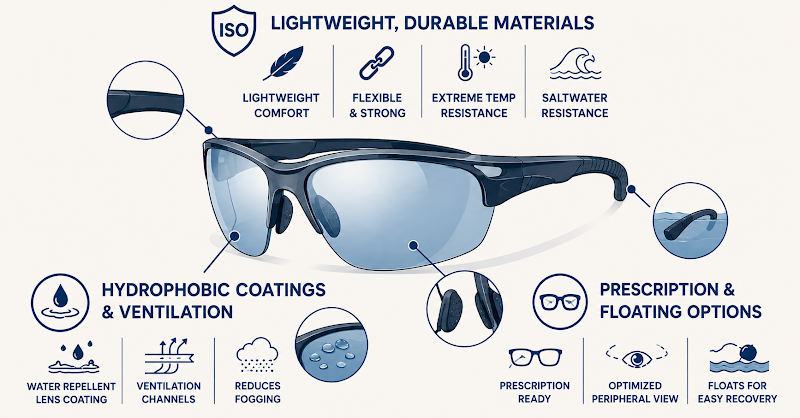
Extreme temperatures and high salinity require rugged frame construction, with applicable eyewear requirements verified against relevant standards such as ISO 12312-1. Technical frame manufacturers utilize premium nylon-based polymers like TR90, which offer flexibility and shape retention to help frames withstand demanding use without compromising fit or optical alignment.
Salty water spray and humidity threaten visual clarity and can quickly ruin an angler’s view. Hydrophobic coatings can help water droplets bead and roll away from the lens surface, while ventilation channels in high-wrap frames can help reduce fogging in humid conditions.
Offering versatile prescription integration is a major differentiator for sports eyewear brands. High-wrap frames require specialized laboratory calibration to ensure prescription fishing sunglasses do not suffer from peripheral distortion, while floating low-density polymers ensure easy retrieval.
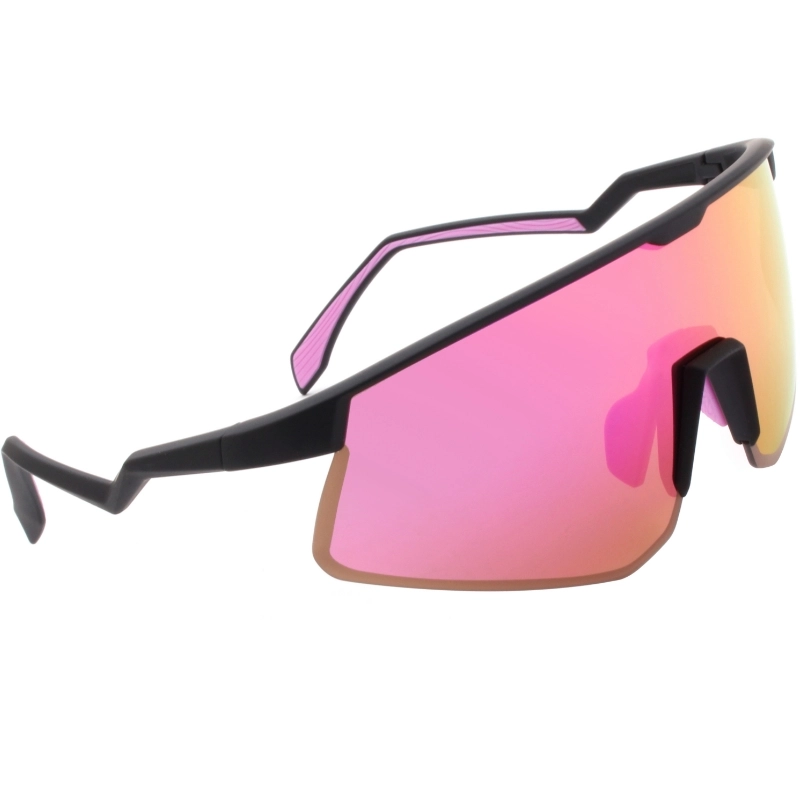
The high-wrap sport frame is a practical choice for active marine environments because it provides broad facial coverage and helps reduce peripheral glare. These eight-base curve designs provide complete facial coverage, blocking wind and peripheral glare while targeting professional anglers demanding maximum protection.
While tournament anglers demand complete wrap-around protection, many consumers prefer versatile designs that transition from the boat to casual settings. Classic aviators and retro square frames constructed from lightweight TR90 offer a stylish look without sacrificing performance, incorporating premium polarization to capture active lifestyle markets.
Kayakers and coastal anglers operate close to the water surface where accidental gear drops are common. Sourcing floating frames made from ultra-lightweight polymers with built-in air chambers is a powerful competitive advantage, keeping the glasses buoyant on the surface for easy recovery.
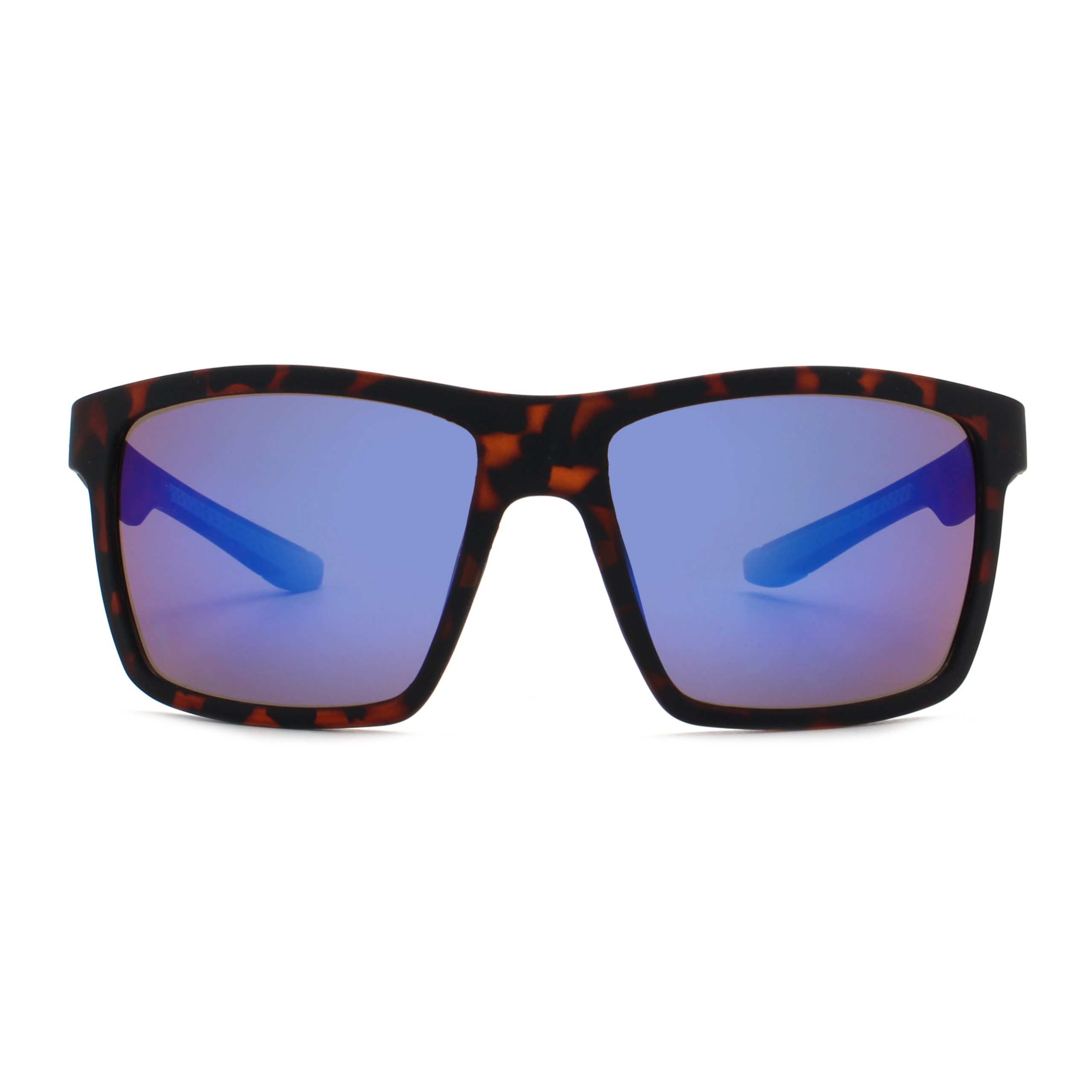
Developing a sports eyewear line requires strategic retail price tiering to capture broad market share. Entry-level models can utilize durable polycarbonate frames and polarized lenses, while premium tournament tiers transition to TR90 frames paired with nylon or glass lenses.
Partnering with a highly flexible OEM/ODM manufacturer is essential for scaling brands. Procurement managers should select reliable suppliers offering flexible Minimum Order Quantities alongside comprehensive design customization, utilizing integrated factories to compress sample development times to just ten days.
An offshore brand in Florida may favor blue-mirrored lenses, while a fly-fishing brand in Montana may prioritize high-contrast amber. Sourcing these specialized configurations builds immense commercial trust among regional retail networks and tournament anglers who require specialized optics.
Sourcing the best fishing sunglasses from an experienced manufacturing partner helps brands build a reliable active-eyewear collection. Securing high-quality sport frames helps prevent costly product failures and supports consistent product quality in demanding fishing environments.
Beautaste Eyewear is a trusted OEM/ODM partner with over twenty years of experience, producing over ten million pairs annually across state-of-the-art facilities. Elevate your catalog with premium Beautaste fishing sunglasses by sourcing our tournament-tested Tilapia and Halibut models, and contact our expert team to secure your next collection today.
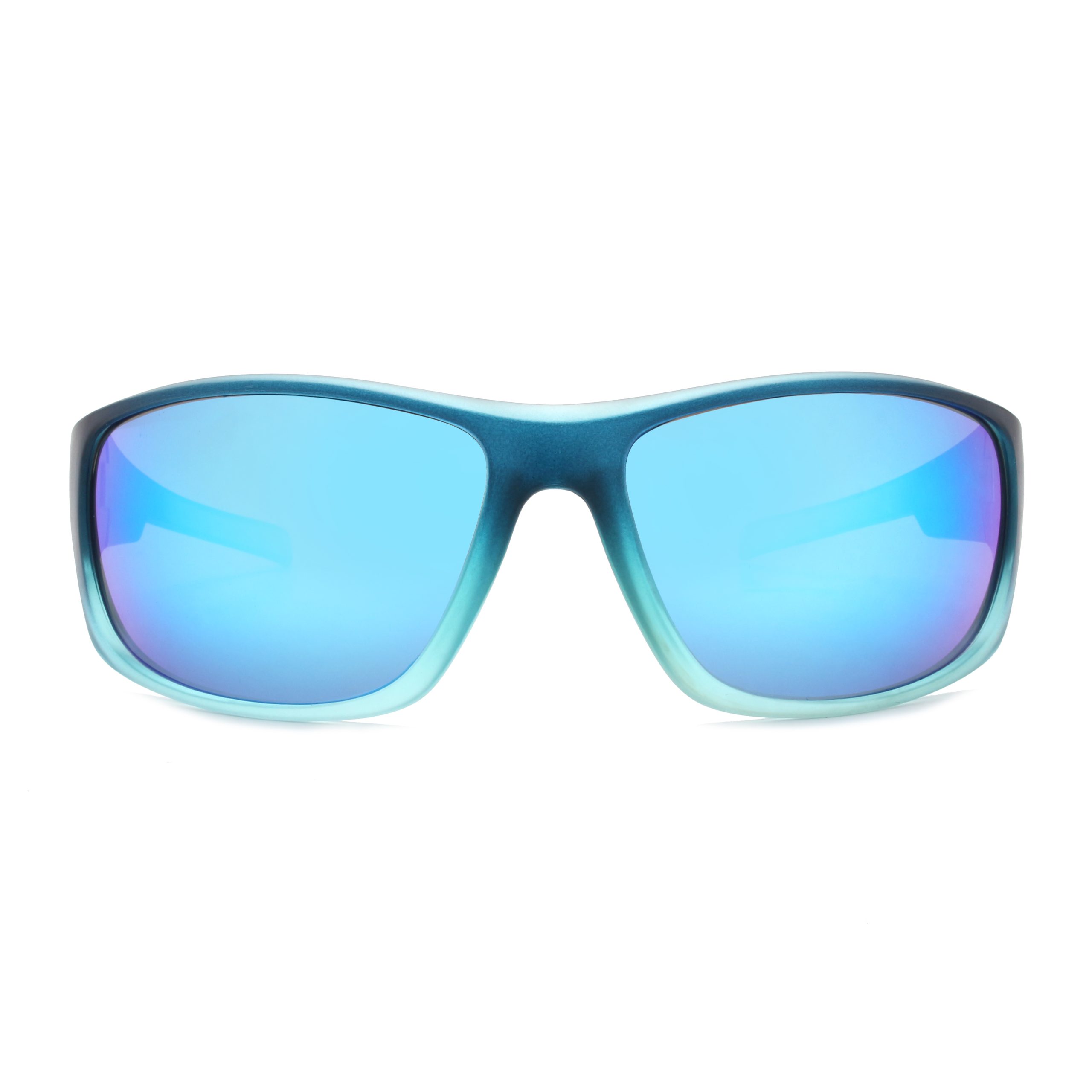
The best lens tint depends entirely on your fishing environment. High-sun offshore saltwater conditions require gray lenses with a blue mirror to maximize glare reduction, while shallow flats and freshwater rivers are best suited for copper, amber, or green mirror.
Polarized lenses reduce horizontally reflected light, which helps cut water glare and makes underwater structures and fish easier to see. This allows you to see beneath the surface and easily spot fish, structures, and rocks that are completely invisible otherwise.
Glass lenses generally offer strong scratch resistance and excellent optical performance, while polycarbonate lenses are lighter and highly impact-resistant. The better choice depends on the angler’s priorities, activity level, and product positioning.

+86-577-86072133

0086 13506515296

 English
 Spanish
 Arabic
 French
 Russian
 Portuguese
 German
 Japanese
 Korean
 Hindi
 Bengali
 Italian
 Turkish
 Persian
 Vietnamese
 Thai
 Urdu
 Dutch
 Indonesian
 Greek
 Swedish
 Malay
 Polish
 Czech
 Tagalog
 Danish






 China
 LIBERIA
 FRANCE
 BARBADOS
 KIRIBATI


