
 24th, August 2026
Procuring safety glasses ANSI Z87.1 helps brands provide standardized protective eyewear appropriate to specified workplace hazards and applicable OSHA requirements. This supports consistent workplace protection while helping distributors reduce compliance and product-liability risks.
On hazardous industrial job sites, supplying unsuitable or non-compliant protective eyewear can create safety and compliance risks during OSHA inspections. For contractors, verifying the physical engravings on each frame provides a clear basis for confirming compliance and evaluating supplier documentation before production approval.
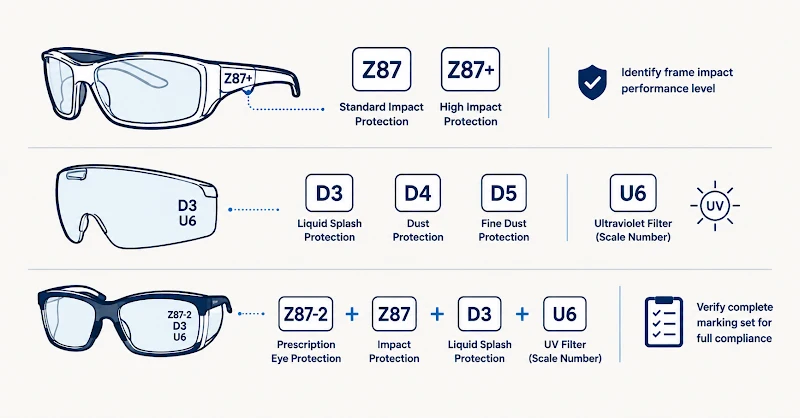
Permanent Z87-series markings identify the applicable performance and protection designation of protective eyewear, meaning buyers should verify the complete marking set rather than relying on a single frame marking. For high-impact applications, Z87+ identifies eyewear with the applicable high-impact designation.
Lenses carry markings like ‘D3’ for liquid splash protection and ‘U’ with a scale number for ultraviolet filters. Recognizing these markings helps warehouse managers match eyewear to the protection required for specific chemical and outdoor applications.
For employees requiring vision correction, sourcing prescription safety glasses is necessary to maintain job site precision. Prescription safety eyewear uses the applicable Z87-2 marking to identify prescription protection; buyers should also verify the required impact and hazard markings.
Under federal workplace law, OSHA does not draft its own technical testing standards for protective eyewear. Instead, under regulations like 29 CFR 1910.133, it incorporates consensus guidelines from the American National Standards Institute by reference.
Using unsuitable protective eyewear can leave workers exposed to flying-particle hazards, making hazard assessment and verified product performance essential. Relying on generic durability claims instead of verified ANSI Z87.1 compliance documentation creates unnecessary procurement and compliance risk.
Deploying compliant safety glasses ANSI Z87.1 is critical for any corporate safety program. Safety officers must conduct routine hazard assessments to match the correct eye protection to the job site, including impact resistant safety glasses where high-impact hazards are identified.
| Workplace Hazard | Protection to Verify | Marking to Check |
|---|---|---|
| Basic impact | Basic impact protection | Z87 |
| High-impact hazards | High-impact protection | Z87+ |
| Liquid splash | Splash/droplet protection | D3 |
An efficient inspection workflow begins by checking the frame’s structural integrity to verify compliant manufacturing. Supervisors should include routine visual checks for cracks, deep scratches, or other damage as part of the site’s eye-protection inspection process.
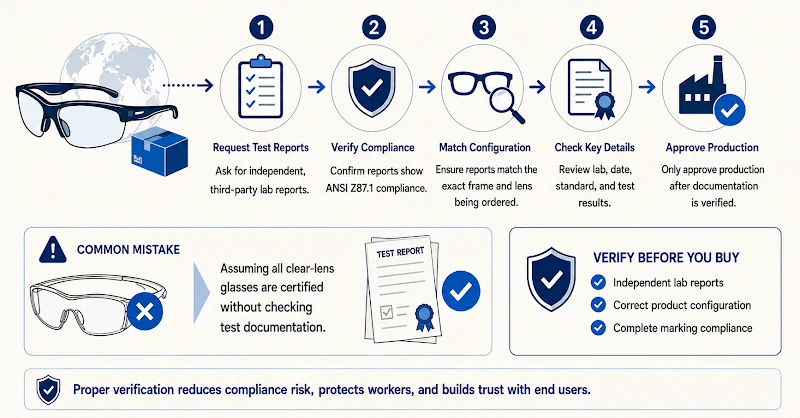
When sourcing safety glasses ANSI Z87.1 from global suppliers, brands must look beyond marketing claims. It is critical for warehouse managers to request independent, third-party laboratory test reports that document compliance with the applicable ANSI Z87.1 requirements. Buyers should also confirm that reports correspond to the exact frame and lens configuration being ordered.
A common procurement mistake is assuming all clear-lens glasses are certified without reviewing the manufacturer’s test documentation. Professional buyers should verify the required records before approving a production run.
Sourcing fully certified safety glasses ANSI Z87.1 protects your brand’s reputation and builds commercial trust with industrial buyers. Ensuring regulatory compliance across your product inventory is a vital step in maintaining market growth and securing high-value distribution contracts.
Selecting a vertically integrated supplier like Beautaste Eyewear streamlines compliance and ensures reliable delivery. Founded in 2004, they manufacture premium-quality frames and sports protective eyewear with CE Mark certifications across China, Vietnam, and Thailand.
Explore the extensive Beautaste Eyewear collection to discover compliant designs that meet strict safety glasses standards. Let our experienced design team support your sourcing requirements through our advanced manufacturing capabilities and quality-control processes.
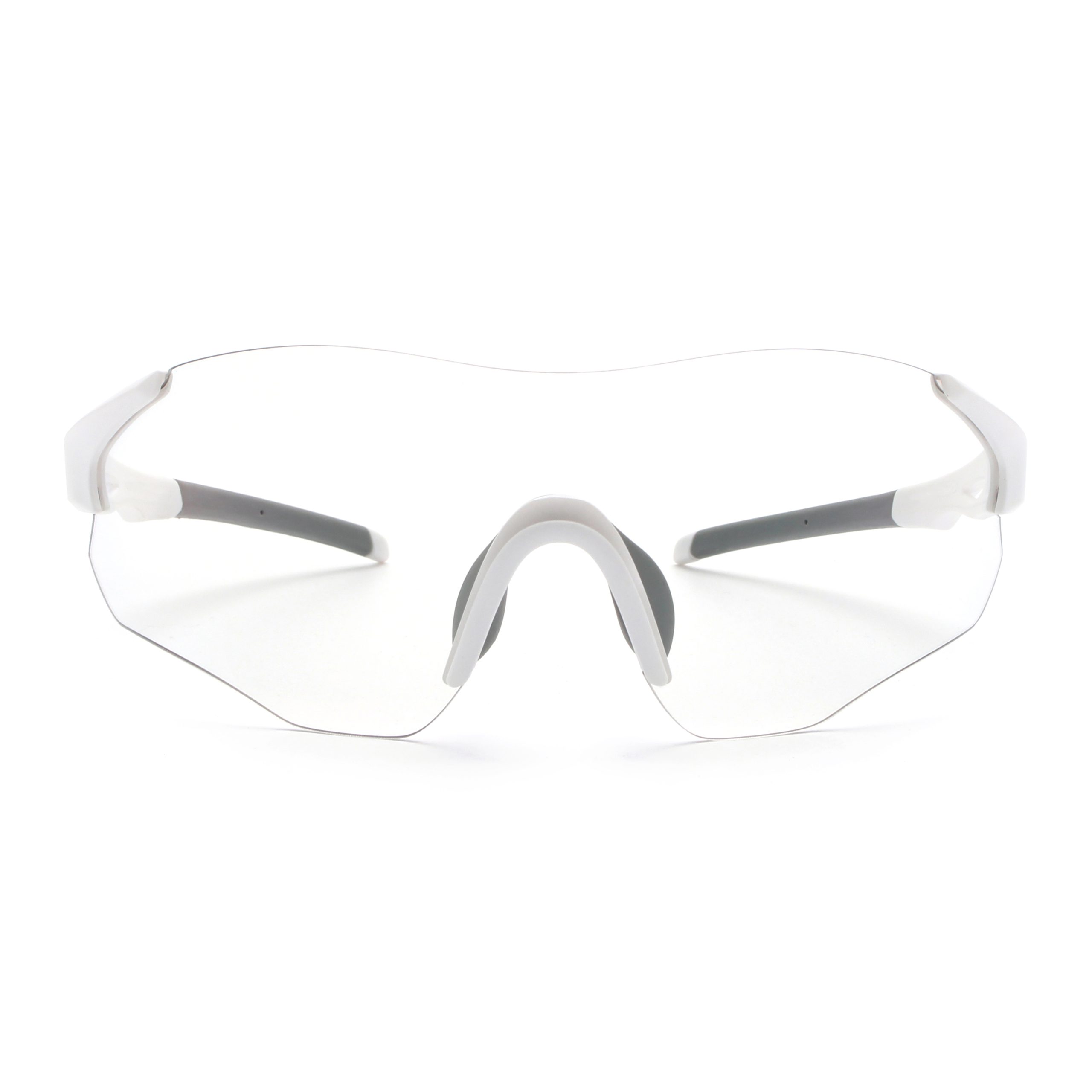
The ANSI Z87.1 standard establishes the physical testing, design, and marking requirements for protective eyewear to safeguard users against workplace hazards. It ensures that certified ANSI Z87.1 safety glasses provide verified protection against impacts, splashes, and radiation.
Inspect both temples and lenses for the permanent ‘Z87’ or ‘Z87+’ physical engravings. Additionally, distributors must demand comprehensive third-party laboratory test reports from the manufacturer to verify that the protective gear has passed authentic impact testing.
Officers conduct a visual check at the start of every shift to cross-reference frame markings with the job site’s hazard sheet. Any safety frame showing hairline cracks, deep scratches, or loose joints must be decommissioned immediately to prevent catastrophic failure.

+86-577-86072133

0086 13506515296

 English
 Spanish
 Arabic
 French
 Russian
 Portuguese
 German
 Japanese
 Korean
 Hindi
 Bengali
 Italian
 Turkish
 Persian
 Vietnamese
 Thai
 Urdu
 Dutch
 Indonesian
 Greek
 Swedish
 Malay
 Polish
 Czech
 Tagalog
 Danish




 China
 LIBERIA
 FRANCE
 BARBADOS
 KIRIBATI


