
 14th, February 2026
UV400 blocks wavelengths up to 400 nanometers, covering all UVB and nearly all UVA rays. "100% UV protection" often stops at 380 nanometers, leaving part of the UVA range exposed. Darker tints do not improve UV blocking. For consistent safety, UV400 is the more reliable standard. Beautaste Eyewear, a trusted OEM/ODM partner for mid-to-high-end brands, tests UV accuracy across batches to verify this level of protection.
UV400 and 100% UV protection both aim to block harmful ultraviolet rays, but they are not always the same. UV400 gives a clear technical limit, while 100% UV protection depends on how the label is defined.
This article explains UV basics, UV400 meaning, 100% UV claims, polarization, real-world use, and lens lifespan. By the end, you will know how to choose sunglasses that protect your eyes and match your daily needs.
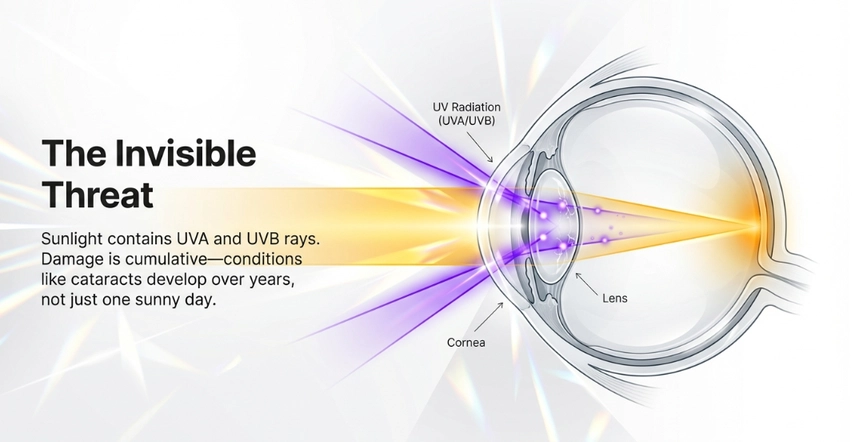
Sunlight contains UVA, UVB, and UVC rays. Only the first two reach your eyes, and both can contribute to slow, long-term damage. Conditions like photokeratitis or cataracts usually develop over years of exposure, not one sunny afternoon. Even short outdoor trips add up.
A common assumption is that darker lenses provide stronger protection. They don’t. Tint only reduces brightness. UV filtration is a completely separate feature, so the UV rating on a lens is what you should trust.
UV400 basically tells you the lens blocks wavelengths up to 400 nanometers. That includes all UVB rays and almost the entire UVA range. Because of that reach, many professionals consider it the more secure standard.
Some 400 uv polarized sunglasses use this rating because buyers expect higher optical safety.
The phrase “100% UV protection” sounds complete, but it can vary. Some lenses stop around 380 nanometers, which still blocks UVB but leaves part of the UVA range uncovered.
This is why the term can feel confusing to buyers. It sounds complete, yet the actual coverage may differ.
| Feature | UV400 | 100% UV Protection |
| UVA coverage | Blocks UV wavelengths up to 400 nm | May stop at 380 nm depending on the standard |
| UV clarity | Uses a clear, defined wavelength limit | Often stated without a specific cutoff |
| Label consistency | Easier to verify with lab testing | Can vary between brands |
| Lens tint impact | Works regardless of lens darkness | Works regardless of lens darkness |
| Buyer confidence | High due to measurable rating | Depends on how the label is defined |
Dark lenses do not guarantee better protection. Tint controls brightness, not UV blocking. The UV rating matters most when comparing sunglasses with 100 uv protection to UV400 lenses.
For outdoor work, driving, or sports use, UV400 offers a more consistent safety standard.
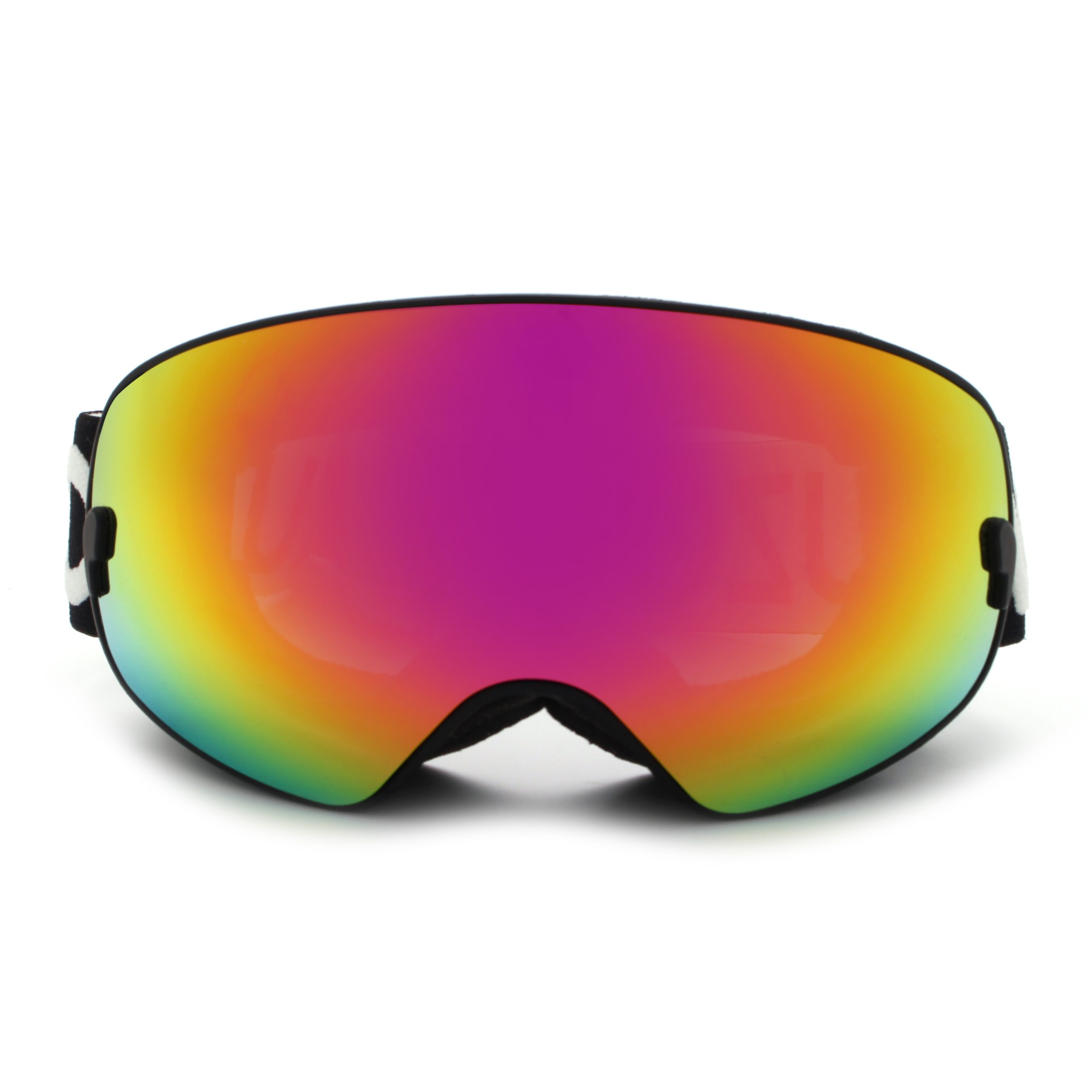
Polarized lenses reduce glare from flat surfaces like roads, water, or metal. They improve comfort and visual clarity, especially during driving and outdoor sports. But polarization does not block UV light by itself.
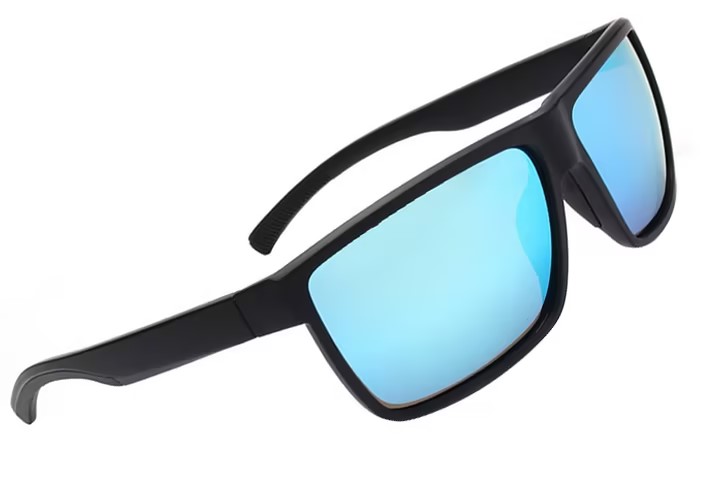
Polar uv400 protection sunglasses combine both features, pairing glare reduction with UV safety. Ultra polarized sunglasses may enhance contrast and reduce eye strain, but the UV rating still needs checking.
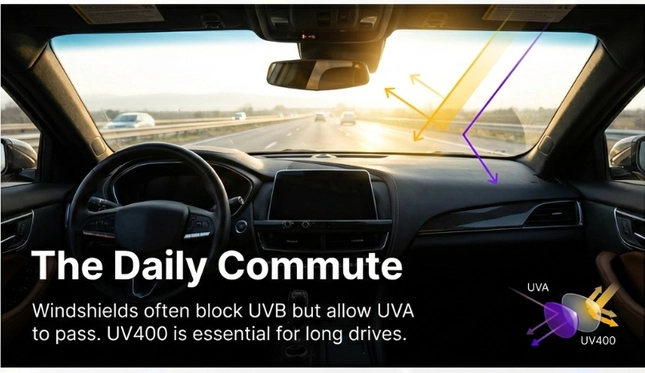
Different activities expose your eyes to different levels of UV.
Car windshields block some UVB but allow UVA to pass. UV400 helps protect your eyes during long drives.
Cyclists, runners, and skiers face reflected UV from roads, snow, and water. Shades UV400 polarized help control glare while providing deeper coverage.
Water reflects UV toward the eyes. Full UVA and UVB protection reduces fatigue and irritation.
UV levels increase with elevation. UV400 or higher-rated uv blocking safety glasses offer needed protection.
In each case, choosing the right uv rating sunglasses directly affects comfort and safety.
It depends on the lens material.
Regular cleaning and proper storage can extend the lifespan of your sunglasses. When lenses develop haze, peeling, or deep scratches, replacement is wise.
Beautaste maintains strict testing processes for lens protection and optical quality. Their QC steps include lens durability checks, UV accuracy measurement, and consistency evaluation across batches. This is supported by in-house labs, multi-point inspection, and certifications across major global markets.
These capabilities are outlined across product and manufacturing documentation, showing long-term dedication to stable performance, fast development cycles, and OEM support for growing brands.
Beautaste also supports customized solutions for sports eyewear, cycling glasses, and polarized lens projects. Their experience helps brands design and launch products with strong UV performance and reliable material selection.
Choosing safe sunglasses starts with understanding the difference between UV400 and 100% UV protection. UV400 offers broader coverage and better defense from deep-penetrating UVA rays. When polarization and strong frame design are added, eyewear becomes more comfortable and useful for daily and outdoor use.
If you want to create or expand your collection, Beautaste Eyewear provides complete design, testing, and OEM support. Explore theircollection to find safer options that help protect eyes every day.
Yes. UV400 covers more UVA wavelengths and provides more complete eye protection.
No. They reduce glare but need a UV rating for safety.
Not always. Tint does not determine UV protection.
Replace them if scratched, peeling, or distorted.
Yes. Up to 80% of UV still reaches your eyes.

+86-577-86072133

0086 13506515296

 English
 Spanish
 Arabic
 French
 Russian
 Portuguese
 German
 Japanese
 Korean
 Hindi
 Bengali
 Italian
 Turkish
 Persian
 Vietnamese
 Thai
 Urdu
 Dutch
 Indonesian
 Greek
 Swedish
 Malay
 Polish
 Czech
 Tagalog
 Danish




 China
 LIBERIA
 FRANCE
 BARBADOS
 KIRIBATI


