
 15th, August 2026
The best prescription golf sunglasses combine accurate vision correction, glare control, suitable lens tint, secure fit, and lightweight construction for changing course conditions. For brands sourcing golf eyewear, prescription compatibility and optical alignment are equally important because high-wrap frames can introduce peripheral distortion when lenses are not correctly positioned.
This guide will give you all the necessary configurations for auditing the perfect lenses and frame. Through an analysis of this benchmark, a brand is able to produce reliable optics which retain maximum structural stability.
Golfers function in challenging environments in which sun exposure and varying terrain impact their vision. Purchasing agents need to choose frames that shield golfers from visual strain while playing in the sun.
Additionally, tracking high-velocity ball flight against bright skies requires superior glare reduction and optical centering. Providing precise correction resolves the visual stress that leads to misread putts and dropped tournament shots.
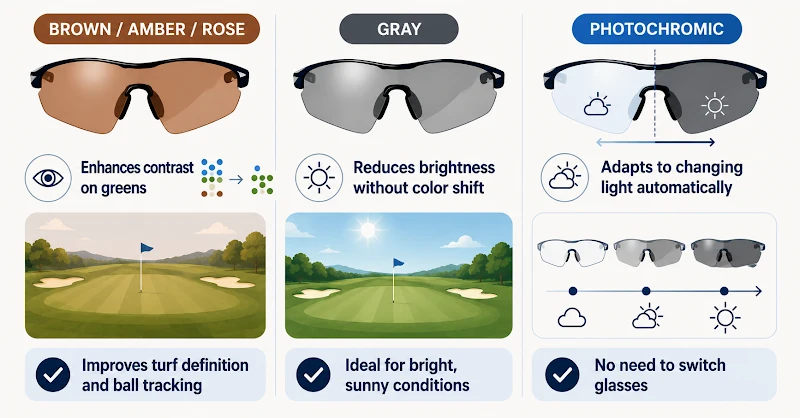
Selecting the proper golf sunglasses lens color highlights turf transitions. Amber, brown, and rose base tints filter blue wavelengths to make green breaks stand out.
For extremely bright environments, neutral gray tints lower light transmission without shifting natural color perception. These gray filters provide uniform light attenuation across open, unshaded links during midday play.
Photochromic options offer dynamic adaptation by darkening under UV exposure and clearing during overcast morning hours. This automatic shift eliminates the need for players to switch glasses when weather conditions change.
High-wrap sport frames introduce complex lens curvatures that require careful optical positioning to manage peripheral distortion. ANSI Z80.1 provides recommendations for prescription ophthalmic spectacle lenses, including relevant optical specifications and tolerances. While single vision lenses provide distance correction, progressive designs offer different focal zones for tasks such as reading scorecard data.
Trivex and polycarbonate lenses offer strong impact resistance, but buyers should verify the applicable impact, optical, and product-safety requirements for the target market rather than treating the lens material itself as proof of compliance.
Anti-reflective backside coatings can reduce distracting reflections, while hydrophobic treatments help water and moisture bead away from the lens surface. Buyers should verify each coating’s stated performance rather than treating them as interchangeable functions. This protective layer preserves visual sharpness when players sweat during high-temperature afternoon rounds.
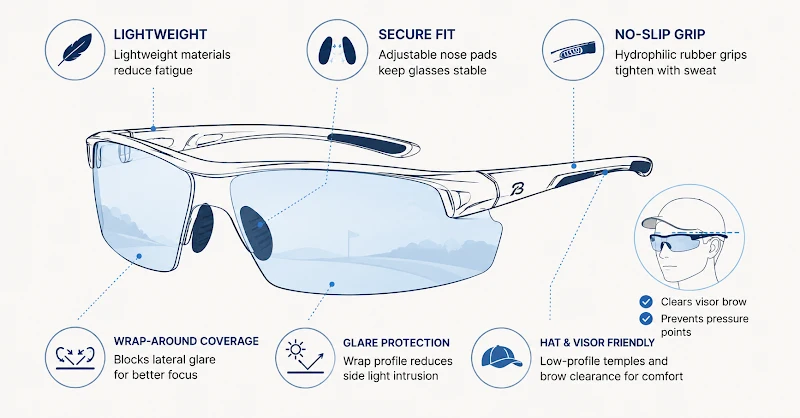
When sourcing the best golf sunglasses, brands must prioritize lightweight polymers like TR90 that resist stress-cracking. Integrating a wrap-around profile blocks lateral glare, keeping the optics stable throughout a swing.
Integrating adjustable, hydrophilic rubber nose pads and temple grips ensures the frame remains locked. These elastomer components grip tighter when exposed to sweat, preventing frame slippage at address.
The frame geometry must feature low-profile, flat temple arms to prevent painful pressure points under hats. Ensuring the top rim clears the visor brow prevents sweat buildup and maintains vertical vision.
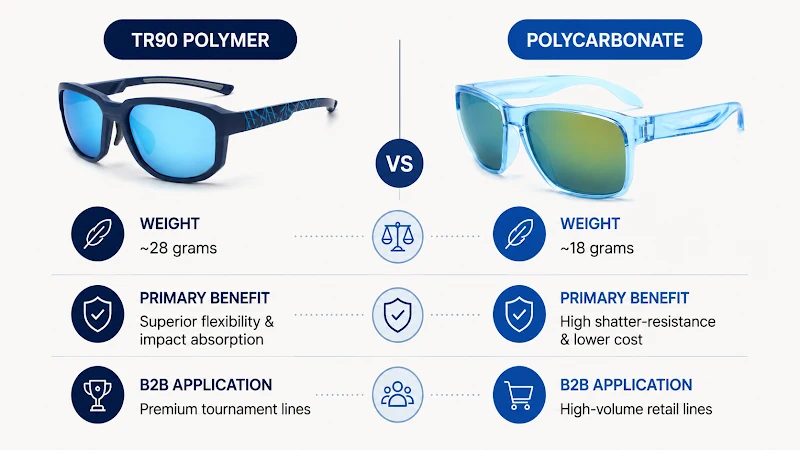
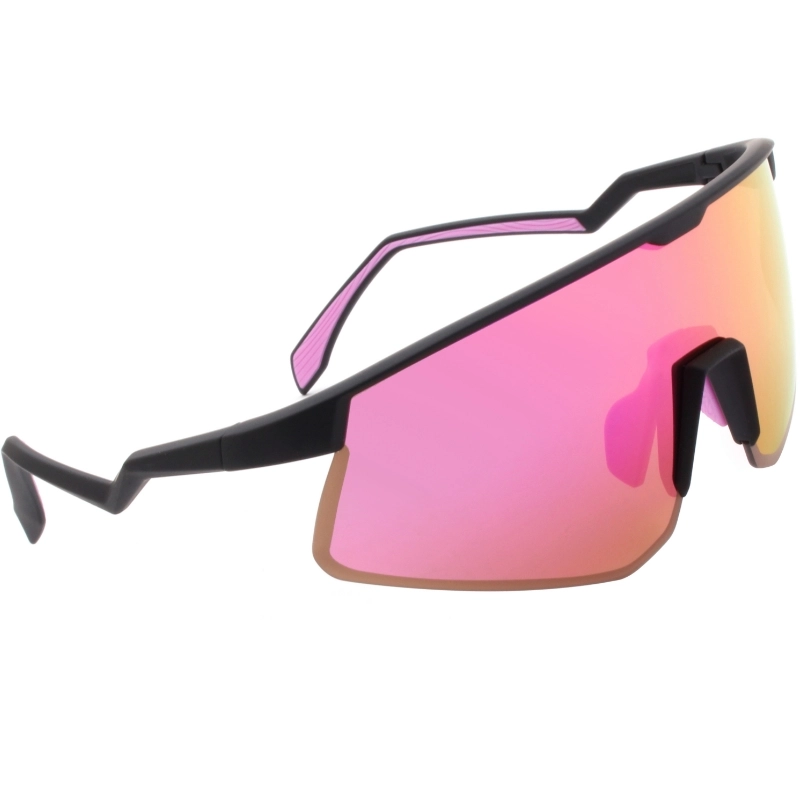
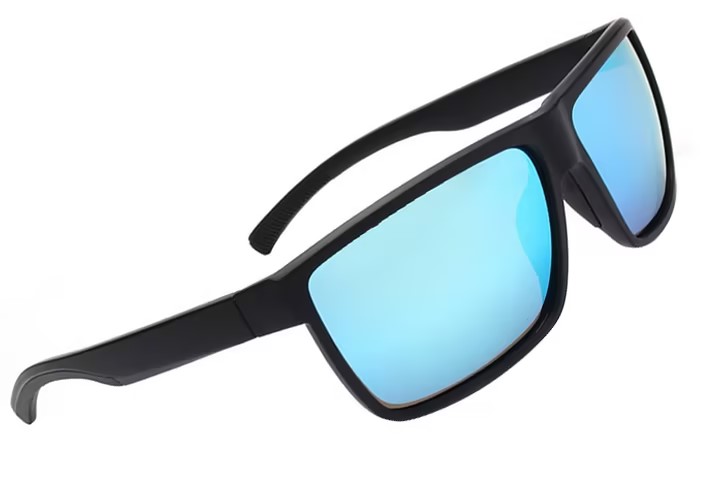
Distributors can capture market share by offering structured product tiers from high-volume polycarbonate frames to premium TR90 lines. Introducing options like Golf Sunglasses – Intense allows brands to satisfy diverse client budgets.
Providing custom team laser engravings and packaging sets a brand apart in competitive sports markets. Our engineers collaborate with brands to preserve design integrity while ensuring technical feasibility.
Additionally, offering robust protective hard cases and microfiber pouches safeguards the sports optics. Providing a manufacturer warranty builds long-term commercial trust and reduces retail returns.
Optimizing prescription golf sunglasses requires an experienced manufacturing partner capable of delivering consistent optical alignment and reliable frame performance. By utilizing factories in China and Vietnam, Beautaste provides flexible OEM/ODM solutions and rapid sample prototyping.
Our high-performance Golf Sunglasses – Spider showcase our precise engineering and commitment to sustainable materials. Explore our selection of Beautaste golf sunglasses to elevate your sports catalog today.
Yes, golfers can secure direct-fit prescription lenses mounted into durable sports frames. These customized optics align the visual center to eliminate peripheral distortion during high-velocity swings.
Amber, rose, and brown tints are the top choices because they maximize contrast against green grass and blue skies. These specific wavelengths help players read grain directions and spot subtle slopes.
While polarized golf sunglasses block distracting glare from sand and water, some competitive players prefer non-polarized lenses. Non-polarized filters preserve natural depth perception, essential for reading delicate green breaks.

+86-577-86072133

0086 13506515296

 English
 Spanish
 Arabic
 French
 Russian
 Portuguese
 German
 Japanese
 Korean
 Hindi
 Bengali
 Italian
 Turkish
 Persian
 Vietnamese
 Thai
 Urdu
 Dutch
 Indonesian
 Greek
 Swedish
 Malay
 Polish
 Czech
 Tagalog
 Danish





 China
 LIBERIA
 FRANCE
 BARBADOS
 KIRIBATI


