
 25th, August 2026
Choosing smart glasses for a brand requires matching the design to its intended use, with work models prioritizing productivity and privacy, fitness models emphasizing secure fit and durability, and daily-use models balancing comfort, style, battery life, and prescription compatibility.
For OEM sourcing, brands will need to confirm frame integrity, electronic integration, optical performance, battery function, and quality control methods prior to sample approval for mass production.
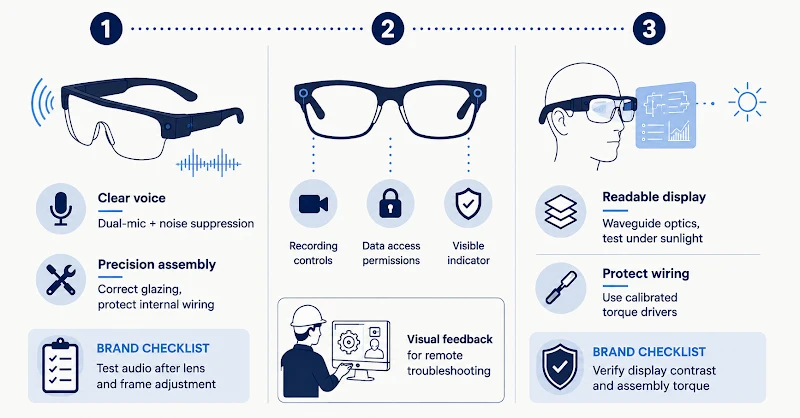
In procurement of smart glasses for work applications, hands-free operations and communications need to be prioritized by brands. In a noisy industrial environment, brands will have to ensure that dual microphone arrays and noise suppression capabilities are adequate to facilitate voice communication.
It is important not to pinch the internal temple wiring during glazing of the lens, which can be achieved via controlled glazing process and tight assembly tolerances. Therefore, audio function and electronic operation needs to be checked following the lens insertion.
Integrated camera module needs to provide an appropriate video quality while the recording controls, data handling and permissions need to be checked for the intended workplace application. Visual communication lines will enable off-site engineers to troubleshoot installation in real time.
Visible indication of recording feature will be helpful in facilitating workplace transparency but brands will have to confirm privacy and recording requirements applicable for the particular target market.
Screen readability needs to be tested under the direct sunlight due to lack of contrast that can compromise visibility of the display. It is possible to project schematic and diagnostic information via waveguide optical system. Improper clamping can pinch internal wiring. Calibrated torque driver will prevent such failure.
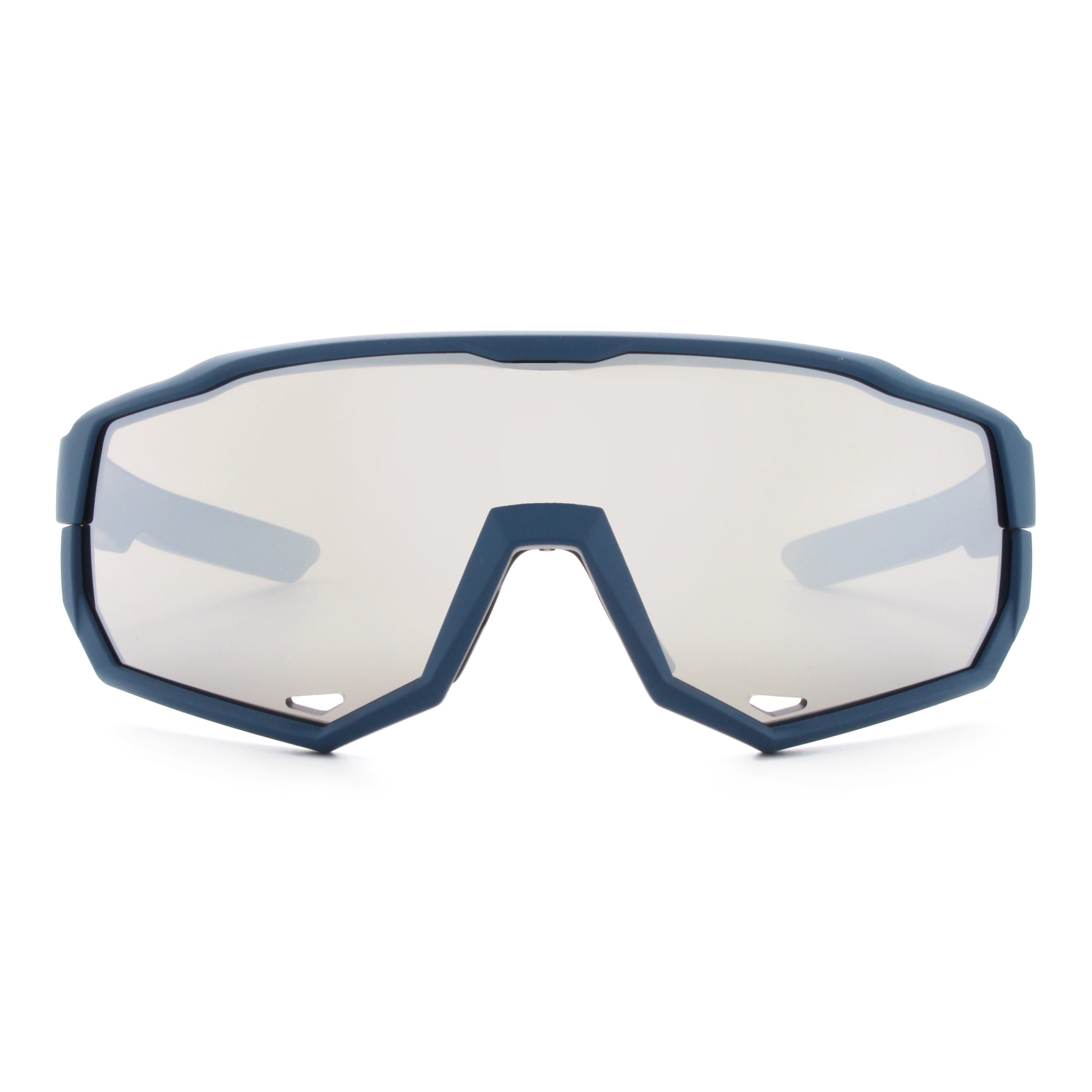
Athletes need real-time metrics. Lightweight head-up displays let cyclists monitor speed, heart rate, and cadence safely.
Our smart cycling glasses and HUD eyewear deliver critical navigation prompts directly to the rider’s view, potentially reducing the need to look down at a separate device.
Sweat and moisture can affect exposed charging interfaces and electronic components during repeated workouts, making moisture protection and charging-port design important QA checks. Where applicable, a verified IP rating can help define the product’s moisture resistance; brands should confirm the actual rating and test conditions before making fitness-use claims.
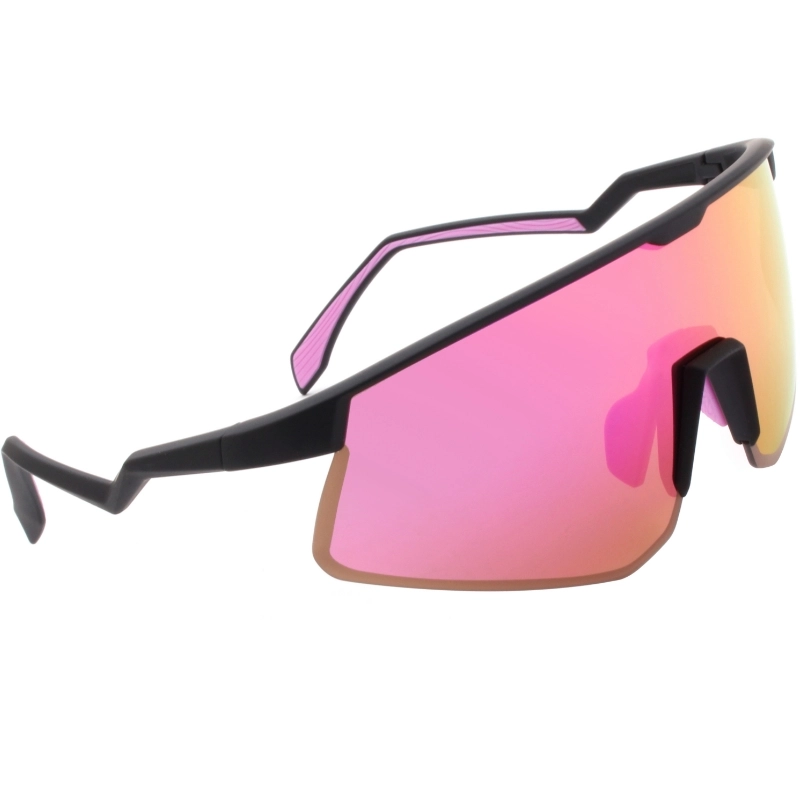
Adjustable nose pads and flexible temple tips can improve frame stability during running or cycling, provided the fit is properly adjusted.
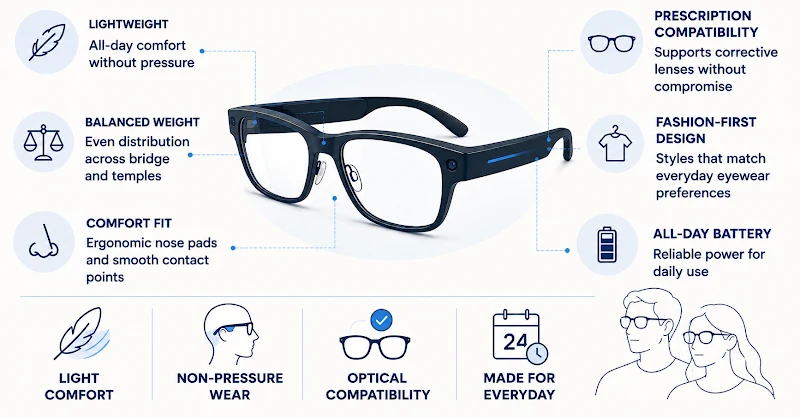
Daily-use buyers generally place greater emphasis on lightweight construction, comfortable pressure points, balanced weight, and a frame style that fits ordinary eyewear preferences. Balanced weight distribution across the bridge and temples can improve long-wear comfort and reduce pressure points.
Explore our sports fashion bluetooth glasses for comfortable daily wear. Sourcing smart glasses with prescription compatibility allows brands to support corrective-lens requirements without compromising the frame’s intended design.
| Use Case | Priority Features | What Brands Should Verify |
|---|---|---|
| Work | Audio, camera, connectivity, display, privacy | Audio clarity, recording controls, display visibility, battery performance |
| Fitness | Secure fit, moisture resistance, battery, lightweight frame | Frame stability, verified IP rating, charging reliability, sweat exposure |
| Daily Use | Comfort, style, battery, prescription compatibility | Weight balance, optical compatibility, long-wear comfort, frame durability |
To launch competitive wearable collections in 2026, brands need a partner capable of executing advanced smart glasses OEM projects. Look for partners with in-house tooling, documented multi-point QC, and ISO 9001 certifications where applicable.
Partner with Beautaste, founded in 2004, with more than 20 years of eyewear manufacturing experience. Review our solutions for eyewear brands to customize premium titanium frames, spring hinges, and PVD colorways.
Choosing smart glasses for a brand requires early sample validation, application-specific testing, and reliable planning before bulk production.
A capable manufacturer should support sample validation, production consistency, and supply planning through bulk production. Request a sample of our Beautaste Eyewear to verify our quality today.
Yes. Smart glasses can combine features such as cameras, speakers, microphones, Bluetooth connectivity, voice controls, or displays, depending on the model and intended application.
For professional environments, prioritize reliable connectivity, clear audio, battery endurance, comfortable fit, privacy controls, and a display or camera only when the workflow requires it.
Smart glasses is the broader category of connected eyewear, while AI glasses typically add AI-enabled functions such as voice assistance, image understanding, or contextual processing. The two categories can overlap.

+86-577-86072133

0086 13506515296

 English
 Spanish
 Arabic
 French
 Russian
 Portuguese
 German
 Japanese
 Korean
 Hindi
 Bengali
 Italian
 Turkish
 Persian
 Vietnamese
 Thai
 Urdu
 Dutch
 Indonesian
 Greek
 Swedish
 Malay
 Polish
 Czech
 Tagalog
 Danish





 China
 LIBERIA
 FRANCE
 BARBADOS
 KIRIBATI


