
 22nd, August 2026
When choosing photochromic sunglasses vs polarized options for daily use, selection depends on light-adaptive needs or glare reduction. While photochromic lenses transition between environments, polarized filters block horizontal reflections.
In terms of business, the choice of an inaccurate lens prescription causes supply chain delays and product returns. Our specialists have noted that even though polarizing filters are highly effective when driving, regular photochromic lenses are inactive when wearing behind UV-proof windshields.
Photochromic lenses react to UV rays and lighten as the amount of exposure is reduced. ISO 12312-1 sets requirements for sunglasses for general use, including relevant performance considerations for photochromic lenses. However, their efficiency and fading performance vary depending on the type of photochromic technology and temperature.
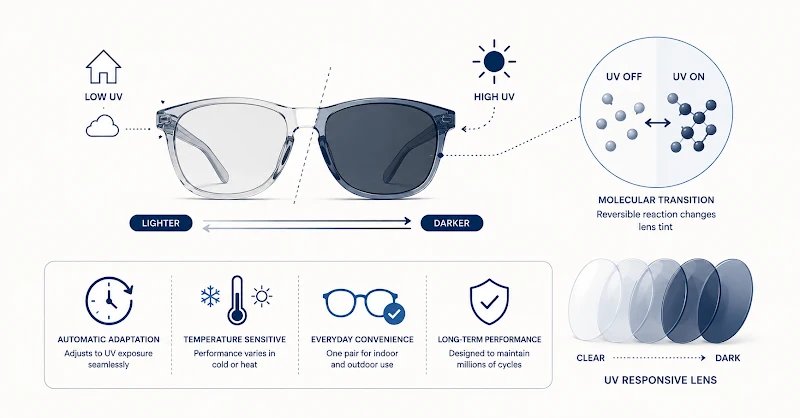
For daily wearers, these light-adaptive lenses combine prescription glasses and sunglasses into one frame. Quality control teams must ensure these adaptive materials maintain performance over millions of transition cycles.
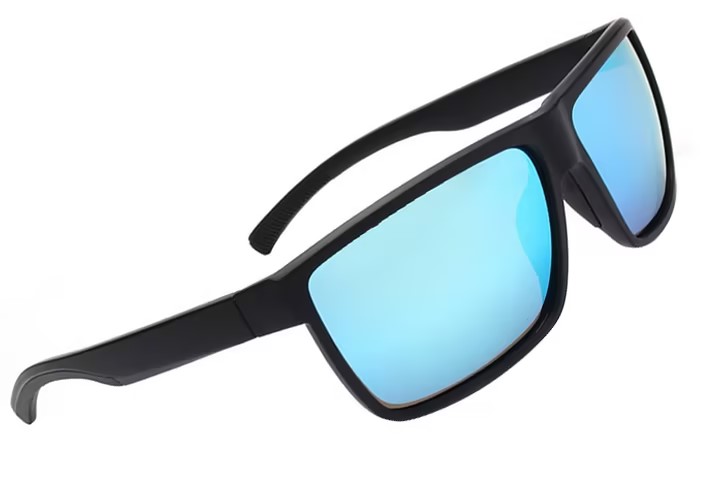
Polarized sunglasses use a polarizing filter that selectively blocks horizontally oriented reflected light, reducing glare from surfaces such as roads and water. This static filter eliminates blinding glare from roads and water without changing its base darkness level.
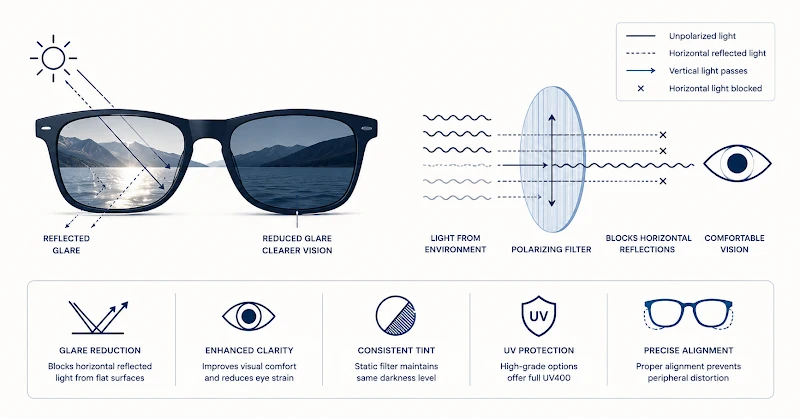
Our classic polarized models enhance visual clarity and reduce eye fatigue during outdoor use. Brands must verify polarizing film alignment during production to prevent peripheral lens distortion.
Evaluating photochromic sunglasses vs polarized technologies requires comparing physical properties, operational behaviors, and environmental constraints. Sourcing managers must weigh these performance factors to align bulk purchases with consumer expectations.
| Optical Feature | Photochromic Technology | Polarized Technology |
|---|---|---|
| Primary Mechanism | Molecular transition activated by UV radiation | Microscopic vertical chemical film filter |
| Optimal Environment | Rapidly changing indoor-to-outdoor light | High-glare environments like water and roads |
| Reaction Time | Temperature-dependent activation lag | Instantaneous, static glare blocking |
| UV Protection | Built-in UV400 blocks 100% UVA and UVB | High-grade options offer full UV400 |
This technical comparison demonstrates that while both lens options satisfy general optical safety requirements, their primary optical functions do not overlap. Therefore, wholesale buyers and brand owners must carefully evaluate end-user activities before selecting bulk inventory.
Photochromic lenses adapt their darkness as UV exposure changes. Standard polarized lenses generally maintain a fixed tint and transmission level.
Polarized filters block horizontal waves reflecting off flat surfaces like roads and water. Photochromic lenses reduce overall brightness but remain ineffective against targeted horizontal glare.
Polarized lenses enhance color saturation and depth perception by effectively removing scattered glare. Photochromic options maintain excellent color fidelity, but contrast depends heavily on current lens darkness.
High-quality polarized lenses can provide strong durability when properly manufactured. Photochromic materials may experience performance changes with extended use and exposure.
Determining the optimal daily use configuration depends on the user’s primary activities and environment. Reviewing specific lifestyles reveals how each technology performs under real-world challenges.
Light-adaptive lenses are ideal for commuters moving between offices and outdoor environments. This convenience reduces the need to carry multiple frames during daily city travel.
Polarized sunglasses block blinding glare from roads and windshields during daytime driving. Standard UV-activated photochromic lenses may darken less behind windshields because automotive glass blocks much of the UV needed for activation.
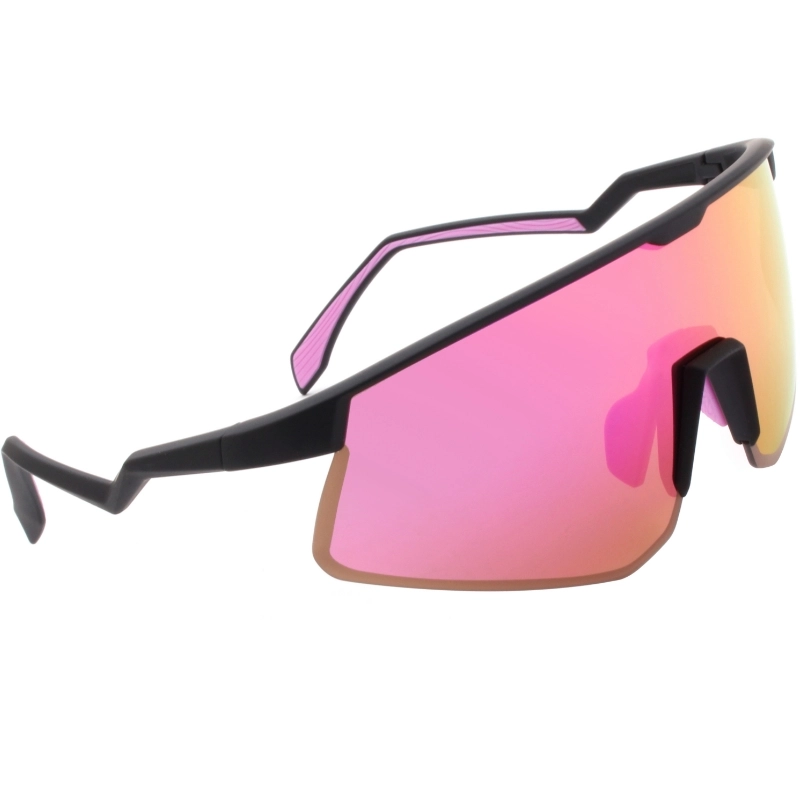
Active athletes benefit from our orange accented photochromic sunglasses to transition smoothly between shaded trails and open roads. For water sports, polarized models are indispensable for blocking surface reflections.
Both lens types support single-vision and progressive prescriptions to accommodate diverse visual needs. Technicians must edge prescription blanks carefully to preserve film alignment and transition coatings.
Product managers must balance their inventory between these two distinct technologies to capture market share. Aligning SKU selection with target customer segments ensures high turnover and minimizes unsold stock.
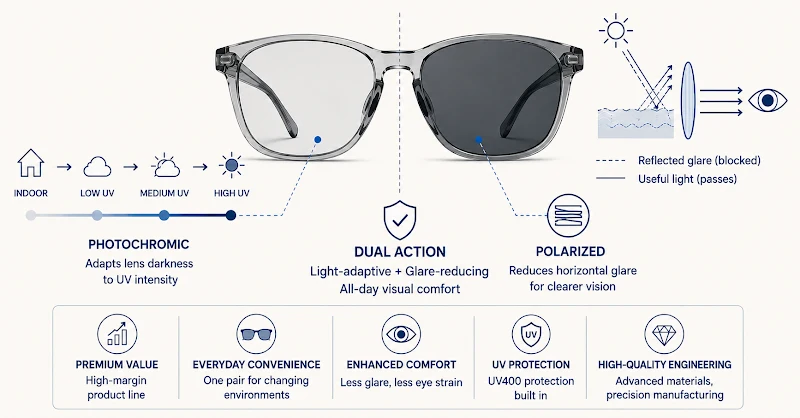
Offering hybrid photochromic lens sunglasses with integrated polarization provides a high-margin, premium product line. This dual-action configuration eliminates glare while adapting to ambient light for ultimate daily convenience.
Brands should target drivers, anglers, and beachgoers with high-performance polarized collections. Office workers and general utility wearers are best served by light-adaptive, transitional product categories.
Establishing tiered pricing allows distributors to capture both entry-level retail and premium optical boutique markets. Merchandising should include in-store displays to showcase transition speeds and polarized performance.
Deciding between photochromic sunglasses vs polarized configurations depends on your market’s specific environmental needs. Partnering with a reliable supplier like Beautaste eyewear streamlines product development and safeguards inventory turnover.
Our vertically integrated facilities meet strict ANSI Z80.3 standards to guarantee consistent batch quality. Contact our sales team today to customize your next bulk eyewear order with precision lenses.
Yes, premium lenses can incorporate both transition chemistry and a polarizing filter in a single frame. These advanced hybrid options adapt to changing light while continuously neutralizing horizontal surface glare.
Standard photochromic lenses perform poorly inside vehicles because windshield safety glass blocks the UV light needed for activation. For driving, polarized sunglasses are highly recommended to block hazardous reflections.
Both technologies can provide effective UV protection when the specific lens meets applicable requirements. Polarization reduces reflected glare, while photochromic technology adapts lens darkness to changing light.

+86-577-86072133

0086 13506515296

 English
 Spanish
 Arabic
 French
 Russian
 Portuguese
 German
 Japanese
 Korean
 Hindi
 Bengali
 Italian
 Turkish
 Persian
 Vietnamese
 Thai
 Urdu
 Dutch
 Indonesian
 Greek
 Swedish
 Malay
 Polish
 Czech
 Tagalog
 Danish






 China
 LIBERIA
 FRANCE
 BARBADOS
 KIRIBATI


